The marketing teams consistently growing on YouTube are treating every upload as a search asset and conducting rigorous YouTube keyword analysis. That means researching the exact terms an audience types into YouTube’s search bar, then optimising every element so the right viewers actually find it.
What this guide covers:
- Free discovery methods and YouTube’s native keyword data
- Dedicated YouTube keyword analysis tools and how to choose between them
- How to apply keywords across titles, descriptions, chapters, and metadata
- A worked example walking through the full research process
- Common mistakes to avoid
- A repeatable team workflow that ties keyword strategy to measurable performance
Contents
Why conduct YouTube keyword research
How to Find YouTube Keywords: A Systematic Approach
Worked Example: YouTube Keyword Research for a B2B SaaS Brand
Common YouTube Keyword Analysis Mistakes to Avoid
How to Build a YouTube Keyword Workflow
The Best SEO Tools for YouTube: A Quick Reference
The Bottom Line: Making YouTube Keyword Analysis Work
Why Conduct YouTube Keyword Research?
In short, it helps marketing teams get their videos found consistently and in more than one place.
With social media platforms increasingly leveraged as search tools, a solid social search strategy ensures you show up where people are looking for answers.
There are two distinct traffic streams worth capturing on YouTube:
- YouTube search: viewers actively searching within the platform for answers, tutorials, comparisons, and reviews
- Google video carousels: when Google detects that a query has strong video intent, it surfaces YouTube results directly on page one in a dedicated carousel – giving brands dual organic presence from a single asset
Beyond the dual traffic opportunity, YouTube offers several structural advantages for marketing teams:
- Lower organic competition – in less saturated niches, ranking on YouTube can be significantly easier than on Google
- Longer content shelf life – video tends to outlast most social formats in terms of sustained reach
- Evergreen compounding – well-optimised tutorial and how-to content can generate consistent traffic months or even years after publication
When a YouTube SEO keyword strategy accounts for both traffic streams, it maximises the potential return on every video a team produces.
How to Find YouTube Keywords: A Systematic Approach
Start with YouTube’s Own Data
Before investing in any tool, it’s worth extracting the intelligence YouTube already provides for free. (Spoiler: it’s surprisingly generous.)
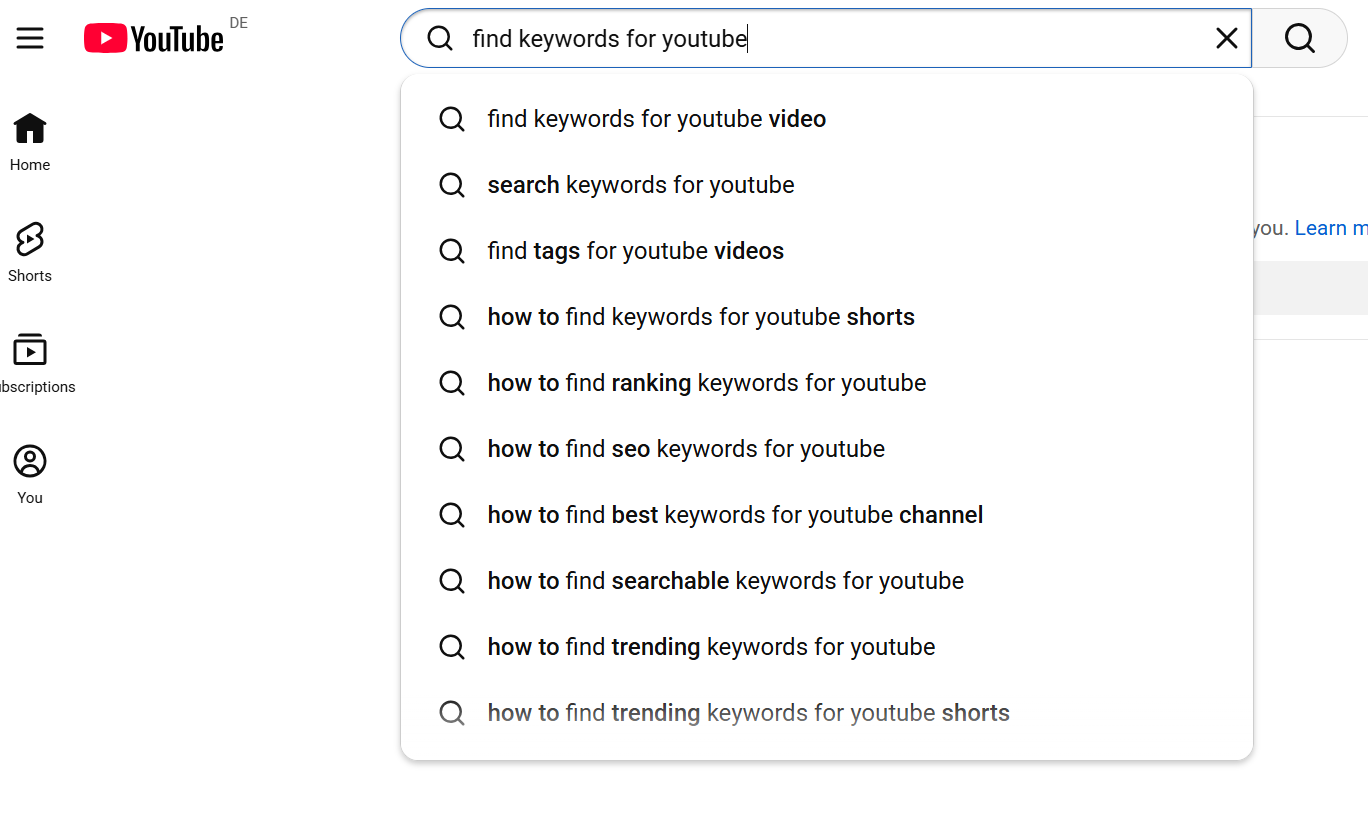
- YouTube Autocomplete is the quickest starting point. Typing a topic into the search bar and capturing every suggestion reflects real searches by real users. Systematically extending seed terms with qualifiers (“for beginners”, “for B2B”, “without budget”) and question words (“how to”, “why does”, “what is”) surfaces long-tail variations.
- YouTube Studio’s Research tab shows the exact terms an existing audience uses to find a channel’s content, surfaces fast-growing keywords and highlights top keywords specific to that channel.
Note: YouTube Studio’s Research tab is most useful for channels with meaningful watch history. New channels will see limited results until they’ve built an audience.