



Expert Interview with Markus Richter: From Channels to Micro Moments – What One Search Means for Modern Marketing
Search isn’t happening in a single channel anymore, demanding a fundamentally different approach from marketers: One Search.
In this expert interview, Peak Ace’s Expert Lead Digital Strategy, Markus Richter, breaks down what a One Search strategy actually looks like in practice. He provides practical strategic roadmaps based on real-world campaigns, enabling you to map cross-platform user journeys and understand which KPIs matter when AI mediates the path to purchase. He also explores how micro moments like evaluation and troubleshooting are being reshaped by AI, why last-click attribution is losing its grip on budget decisions, and what brands can do in the next 90 days to stay competitive.
Whether it’s understanding One Search KPIs, building decision assets for the mid-funnel, or earning citations in AI-generated answers, Markus lays out what concrete steps you need to take to stay ahead. Let’s dive right in!
1. What is “One Search”, and what’s the biggest misconception marketers have about it right now?
One Search treats search as a behavior across surfaces, not a Google-only channel. The biggest misconception is thinking it’s one blueprint channel plan, when it’s really a journey + measurement operating model.
AI answers, social search, marketplaces, and communities now handle large parts of discovery and evaluation. Users still have the same intent, but they execute it across multiple apps and often get good enough or better answers without clicking. If your KPIs are last-click heavy, you’ll over-invest in harvest (brand + retargeting) and under-invest in creation (proof, authority, education).
How we should think of a One Search strategy:
- Build a user intent map (jobs to be done, questions, objections) and assign the best surface per moment (Google vs TikTok vs Reddit vs AI).
- Create decision assets that answer the most frictions of the user during their research process
- Align SEO + paid + social on shared definitions: qualified visit, assisted conversion, incrementality tests.
We don’t want that copy-paste one message everywhere logic, and we don’t pretend last-click ROAS is truth. We validate with experiments where tracking breaks.
AI increases leverage, but it doesn’t turn a silo into a strategy.
2. Which micro-moments are being reshaped most by AI: discover / evaluate / decide / troubleshoot, and why?
AI reshapes Evaluate and Troubleshoot the most. That’s where synthesis beats browsing and where speed beats navigation.
In evaluation, users want a shortlist, criteria, trade-offs, and “what would you pick if…”. AI delivers that in one interaction.
In troubleshooting, AI replaces help centers and forum digging with step-by-step fixes.
Discovery is also shifting, but it’s split between social algorithms and AI; decisions still depend on trust, price, and frictionless checkout.
Users are looking for real answers to real problems or questions. No fake comparisons, no “SEO fluff” how-tos, no advice pages that dodge the hard questions (pricing, constraints, risks, or linking to affiliate links. A trustworthy understanding of the desires, needs, and pain points of the user is the most important micro-moment that brands can build trust with the user.
If AI can answer the middle of the journey, your content must win on clarity, proof, and specificity.
3. Are users moving from keywords to context-rich prompts, or are we just seeing different packaging of the same intents?
Same intents, different packaging. Keywords were compressed thoughts; prompts are the full sentence.
Search trained users to translate messy needs into short queries. AI lets them keep the complexity: constraints, preferences, context, urgency. The intent didn’t change, but interpretation did: AI infers what “good” means and returns synthesis, not a list of links. That reduces informational clicks and increases the value of being the brand AI consistently understands and can justify.
4. In 2026, where do user journeys actually start for your clients: Google, social, marketplaces, communities, or AI assistants?
They start everywhere, but the trend is clearly going towards social + AI. They start more journeys, but Google still validates many, and marketplaces often close. But think about your own behaviour. How much time are you spending browsing, reading, scrolling through different sites, apps, platforms, and how much time is actually for researching information? I would guess 90:10.
Social search has become a default for “show me” discovery. AI assistants absorb a growing share of research, often without clicks (dark funnel). Google remains the “prove it” layer for price, reviews, alternatives, and brand legitimacy, especially when stakes are higher. For commerce, convenience pushes transactions to marketplaces unless the brand creates a clear reason to buy direct.
With a good data platform, you can analyse your best performing entry points and evaluate which are just bringing traffic and which channels are supporting buying or conversion decisions.
- Map “start points” by audience: creator-first, Google-first, marketplace-first, community-first.
- Build a proof spine that travels: expert pages, studies, case results, reviews, integration docs.
- Run brand demand diagnostics: branded search lift, share of search, assisted conversion patterns.
The journey starts where trust starts, not where your dashboard is most comfortable.
5. What are the most common cross-platform handoffs you see right now during? Can you give one example for B2B and one for e-commerce?
The most common handoff is inspiration → validation → proof → conversion, and it’s rarely inside one platform.
LLMs and social platforms reduce browsing, so users jump faster to validation. They don’t “read everything”; they confirm a shortlist and then look for credibility signals: reviews, community feedback, real-world implementation, delivery, returns.
Practical examples:
- B2B: LinkedIn POV post → AI shortlists vendors → Google “brand + pricing/security/integrations” → Reddit community proof → demo request → retargeting on case study.
- E-commerce: TikTok/IG discovery → Google “brand + reviews/sizing” → Amazon for review volume + delivery → brand site for bundle/guarantee → purchase where friction is lowest.
Do not optimise every touchpoint for immediate conversion. Optimise each Touchpoint for its job: create demand, reduce risk, prove value, close, and have a connection between your ad and landing page to deliver the best user experience and trust. Most funnels fail in the handoff, not in the ad.
6. If “search” is now happening inside multiple apps, what does an effective One Searchchannel strategy look like? Do you still plan by channel, or by intent/use case?
Plan by intent/use case, execute by channel mechanics. Channel-first planning creates silos; intent-first planning creates compounding assets.
Each app has different retrieval and persuasion rules. You can’t “SEO your way” through TikTok, and you can’t “creator your way” into B2B security objections.
Here’s a practical ‘what we do’ at Peak Ace:
- Create an intent matrix: discover, evaluate, decide, troubleshoot, times key use cases.
- Assign content formats per surface: short video for discovery, comparison tables for evaluation, feeds for marketplaces, expert pages for authority.
- Use shared KPIs: qualified demand, assisted conversion, incrementality tests, and retention signals.
Understanding the user intent is the strategy; channels are distribution.
7. How do you expect AI answer experiences to change the balance between SEO, paid search, and social search budgets over the next 12 months?
Not “SEO dies”, but the budget logic shifts.
What we see:
- SEO: More investment in assets that AI can confidently use. Think clear entity signals, expert content, original data, and pages that answer evaluation questions. Less “publish more blog posts”, more “publish fewer, stronger proof assets”.
- Paid search: Pressure on generic non-brand terms where AI answers reduce clicks. Paid search stays strong for:
-
- Brand defense,
-
- High-intent terms,
-
- Shopping/product queries,
-
- Situations where the SERP is still transaction-oriented.
- Social search: budgets increase for categories where short-form video is now the first search layer (beauty, fashion, travel, food, lifestyle, increasingly B2B for awareness).
What changes tactically:
- More incrementality testing (geo tests, holdouts) because last-click gets noisier.
- More creative + proof spending, because persuasion happens earlier and off-site.
- More focus on distribution, not just production: getting cited, mentioned, and recommended across surfaces.
- More money on demand creation and proof, less on ‘we’ll buy any generic click’.
8. Lots of teams are talking about GEO / LLMO. What’s the non-hype definition you use internally, and what are the first deliverables you actually ship?
GEO/LLMO is increasing the probability that AI systems retrieve, trust, and accurately represent your brand for the intents that matter. Not “ranking in ChatGPT” but becoming the option an AI can cite without guessing.
AI answers don’t just “show your page”; they compose an answer. That means messy brand facts, thin proof, or missing coverage turn into either (a) no mention, or (b) wrong mention.
The competitive edge shifts toward brands with clean entity signals, defensible claims, and content that matches real evaluation prompts.
What Peak Ace actually ships first:
- Status quo analysis (AI answer landscape): we benchmark how your brand and key competitors show up across relevant prompts, not just in SERPs.
- Peec AI setup as the analysis layer: we define a prompt set per intent cluster (discover/evaluate/decide/troubleshoot), run it at scale, and track outputs over time.
- Citation and source mapping: we extract which sources AI systems cite (publishers, review sites, communities, your own pages) and where your brand is missing or misattributed.
- Content gap analysis (brand + competitors): we map gaps by question type (comparisons, alternatives, “best for”, implementation, pricing, limitations) and identify which competitor assets repeatedly earn citations.
- Derived content strategy: a prioritized backlog of “decision assets” (comparison pages, implementation guides, proof hubs, original data, expert pages) plus distribution targets that are actually being cited.
You don’t optimise AI answers with hacks. You optimise them by earning citations and removing ambiguity.
9. In the context of One Search, what metrics are you telling clients to stop obsessing over, and what are the replacement KPIs for an AI-mediated journey?
Metrics to stop obsessing over (or at least demote):
- Last-click ROAS / CPL as the single truth
- Organic clicks only as proof of SEO value (AI answers reduce clicks even when influence increases)
- “Rankings” alone without intent-stage context
- Attribution-model swings without incrementality validation
Replacement KPIs:
- Incremental lift measures
- Branded demand growth: brand search volume, brand + category combinations, direct traffic quality
- Evaluation success signals:
- time-to-decision (where measurable)
- demo-to-close rate (B2B)
- return rate/repeat rate (e-commerce)
- support contact rate reduction (troubleshoot impact)
- Share of credible references (where your proof assets show up: reviews, partners, industry mentions)
- Assisted conversion indicators:
- view-through on key proof content
- multi-touch sequences that correlate with higher conversion probability
- Content usefulness metrics:
- engaged sessions on evaluation pages
- scroll depth on comparison/implementation pages
- internal search logs (“integration”, “pricing”, “security” queries)
If AI reduces clicks, the KPI can’t be “clicks”. It has to be “did we increase qualified demand and conversion probability across the journey”
10. If you had to give one rule for 2026 strategy: “Don’t optimise for channels; optimise for ____.” Fill in the blank.
Don’t optimize for channels; optimize for the decision your customer is trying to make.
11. “SEO is becoming Answer Engine Optimisation.” Agree or disagree?
Disagree: SEO isn’t “AEO” now. It’s making sure your brand is the credible, provable answer wherever people research and decide (Google, LLMs, social, communities), not just polishing pages to win a snippet.
12. What are the top three moves you’d recommend to a brand in the next 90 days to stay competitive in One Search and AI-shaped search?
STEP 1: Get your AI-search baseline, then clean up what the internet “knows” about you.
Run a prompt-based audit for your brand and 3–5 competitors (by intent: discover/evaluate/decide/troubleshoot), capture what AI says, what it cites, and where you’re missing or misquoted. Fix the source-of-truth layer fast: positioning, product/service facts, pricing logic, expertise signals, and proof pages.
STEP 2: Publish decision assets that win the mid-funnel conversation.
Ship a small, high-impact set (think 5–10 pages, not 50): “best for”, comparisons, alternatives, implementation, pricing/trade-offs, plus one strong proof hub. Make it scannable, honest about limits, and loaded with real evidence so humans can decide quickly and AI has something citeable.
STEP 3: Use paid to build brand memory and shape early research, then defend demand capture.
Invest in creatives that teach the category and your POV (the language people later type into prompts), amplify your proof assets, and retarget research signals (video completion, engaged content) not just “visited site”. Keep paid search sharp: brand defense, high-intent non-brand, and selective competitor terms only with a differentiated landing page. Track it via brand search lift/share of search and conversion quality, not last-click ROAS alone.
Conclusion: From Micro Moments to Measurable Impact: Building a One Search Strategy That Lasts
What Markus laid out here is clear: rather than a framework you intergrate into existing channel plans, One Search is a larger shift in how teams think about the entire user journey. From rethinking micro moments to replacing vanity metrics with One Search KPIs that reflect real demand and conversion quality, the real opportunity here lies in aligning content, paid, and social around the decisions customers are actually trying to make.
With AI added to the mix – reshaping how people discover, evaluate, and choose – brands still optimising for clicks in a world that’s moving beyond them risk ignoring the moments that create demand in the first place. In this context, One Search is about building consistent brand identity across platforms, building both user and AI trust. That means investing in clarity, proof, and cross-surface consistency now, before the gap between visibility and irrelevance widens further.
Ready to build a One Search strategy that works across every surface your audience touches? Explore Peak Ace’s Digital Strategy services to get started.
Already have a specific area you want to focus on? Then be sure to check out our GEO/LLMO, Social Search, and SEO services.
Expert Profile: Expert Lead Digital Strategy, Markus Richter
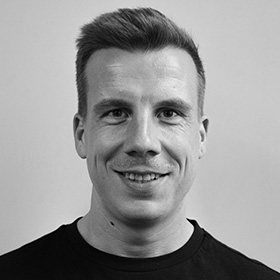
Markus Richter is Peak Ace’s Expert Lead Digital Strategy. Since joining the company in 2023, Markus has led and collaborated on major international projects across departments, including Paid, Organic, and Digital Strategy & New Business. Previously, Markus was a Senior Consultant, Digital Marketing at Dept Agency.
Want fresh insights delivered to your inbox?
Subscribe to our newsletter!